As the aviation sector continues to manage strong global demand, constant vigilance is required to respond to the safety challenges associated with the expected increase in traffic.
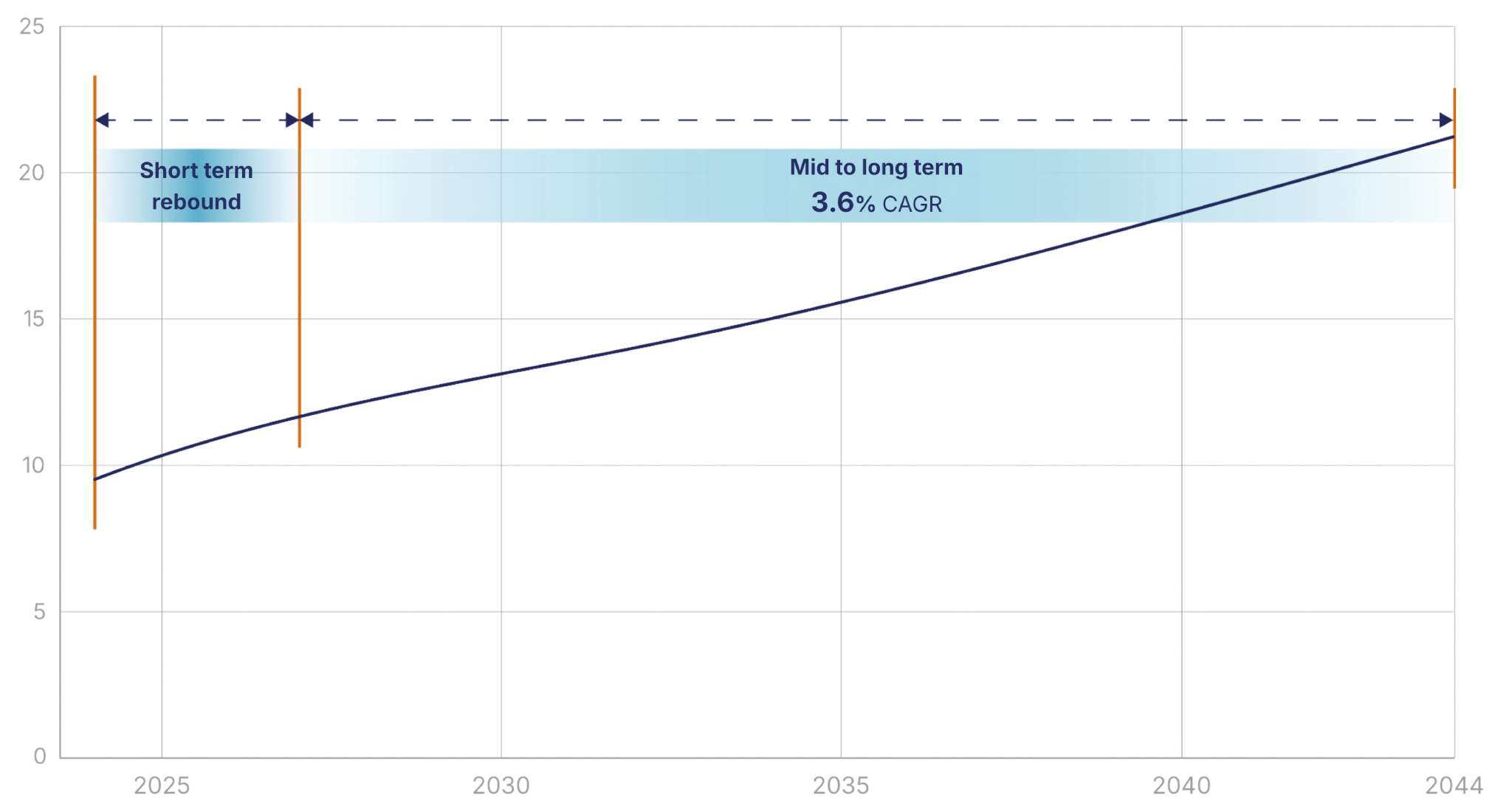
Passenger traffic forecast shows a continuing rebound over the next two to three years, trending towards a long-term growth rate of around 3.6%. Beyond the increased risk exposure due to this expansion, we face an increasingly complex operational environment, driven by the emergence of new operators, types of operations, and evolving threats.
All actors across the industry must work together and share information about how to address the systemic, operational, and emerging threats to ensure that safe aircraft are safely operated, in a safe air transport system.
Fostering a positive safety culture based on open communication across the air transport system is essential for the industry.
Passenger traffic forecast
Continuing rebound over next 2-3 years trending towards a long-term growth rate of ~3.6%Compound Annual Growth (CAGR).
A call for the industry to intensify efforts in attracting and training new talents to manage the growth and safety challenges.
Over the next two decades, the commercial aviation sector will navigate a complex period of transformation, driven by fleet renewal and surging air traffic demand.
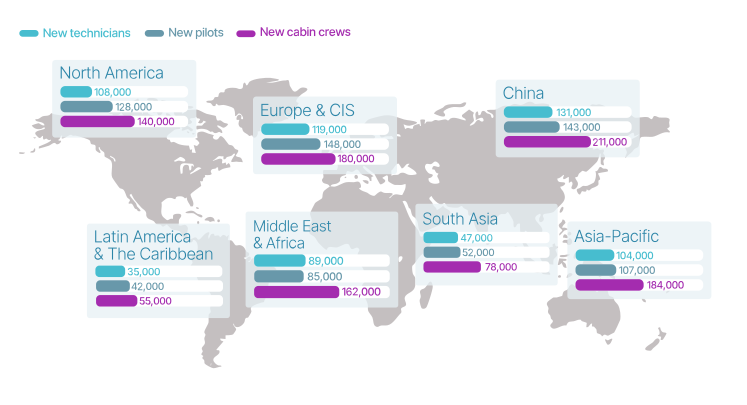
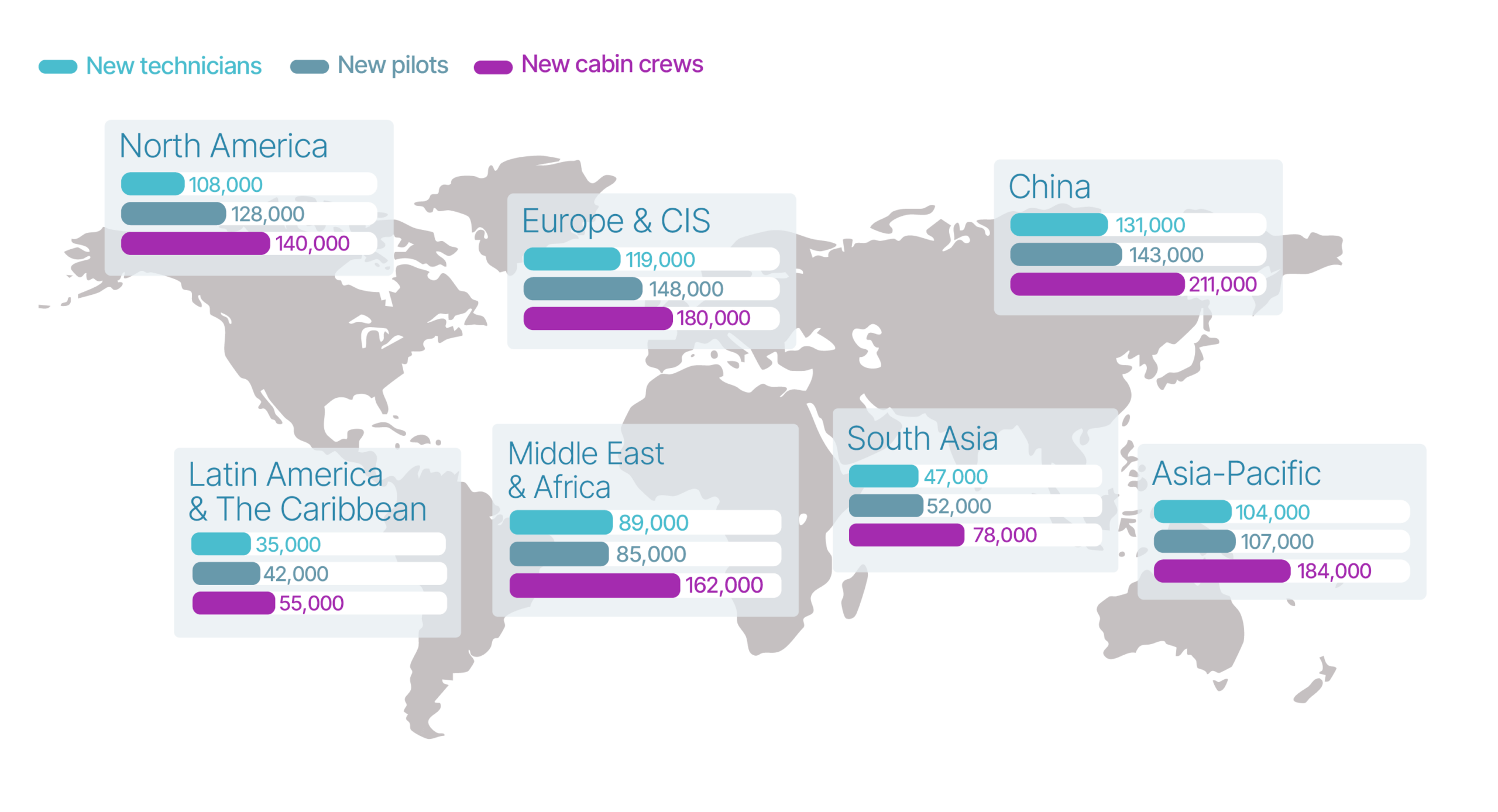
The industry anticipates recruiting 2.35 million skilled professionals to manage this growth. The graph below shows a projection of the global workforce required for the next 20 years with a forecast by region.
705,000 technicians
633,000 pilots
1,010,000 cabin crew
This rapid development requires a comprehensive workforce strategy to attract new aviation professionals with suitable competencies. This extends well beyond airlines, as more staff will be needed in ground support, air traffic control, and safety regulation. Workforce expansion in aviation is not merely a matter of increasing numbers of people; its effectiveness depends on the quality and commitment of the new personnel.
Furthermore, commercial aviation is also contending with fierce competition from other markets to attract the best individuals.
New professionals need careful training that goes beyond technical skills and builds a strong sense of safety responsibility. This will also depend on the capacity to ensure effective knowledge transfer across generations.
Industry-wide collaboration is key to overcoming this challenge. The aviation sector must find, develop, and retain talented people who are capable of upholding high safety standards. By successfully managing this workforce transition, aviation can continue its global expansion while keeping passengers safe.
2,350,000 cumulative new workforce needed over the next 20 years