Accident Rates
by Category & Generation
Loss Of Control In-flight (LOC-I) accident rates
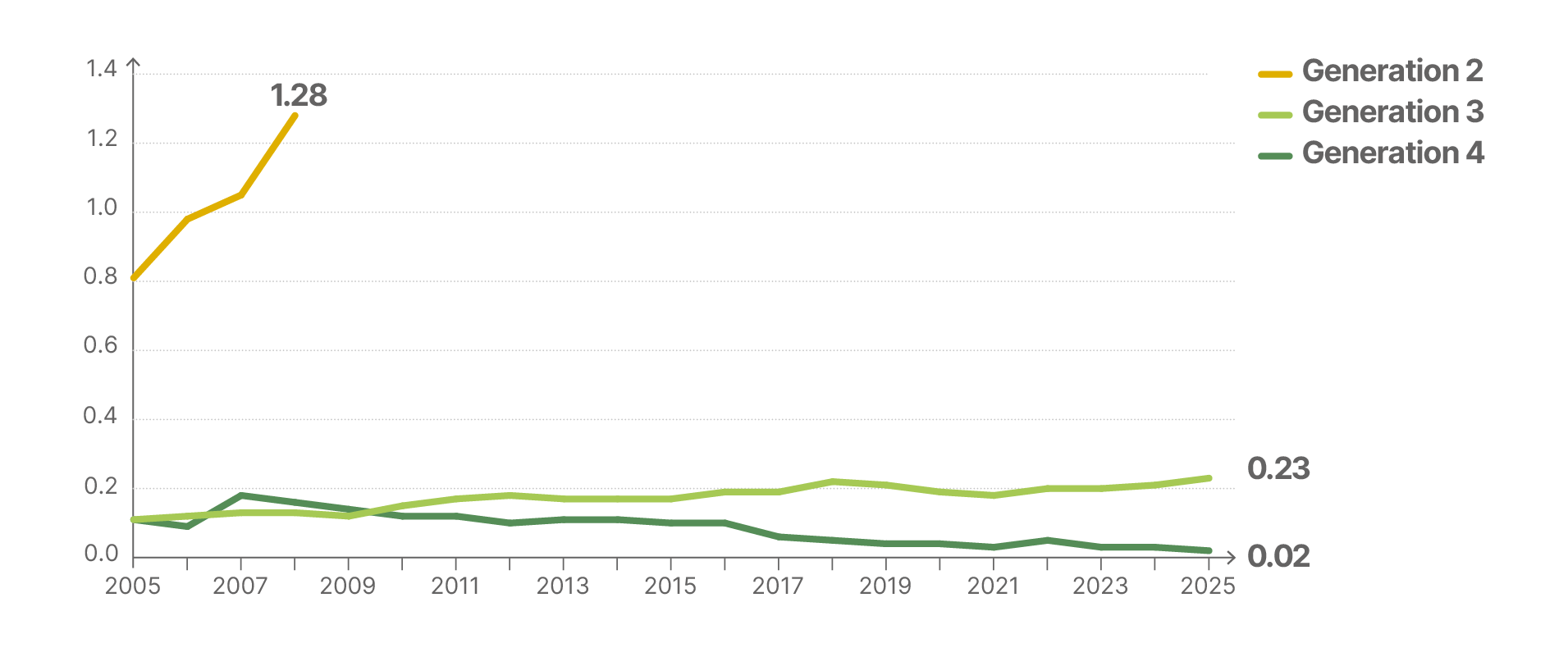
Flight envelope protection introduced with generation 4 aircraft has helped reduce LOC-I fatal accident rates by 91% compared with generation 3.
The generation 4 aircraft have accumulated over 30 years of in-service experience since the A320 first entered into service in 1988. This represents more than 293 million accumulated flights by the end of 2025, which is a strong statistical basis illustrating the significant safety benefit of fly-by-wire enabled and flight-envelope-protected aircraft to address LOC-I accidents.
There were no fatal LOC-I accidents recorded for generation 4 aircraft in the last decade. Therefore, the 10-year moving average rate is zero for this generation in 2025. The rate of LOC-I hull loss accidents is 89% lower for generation 4 aircraft when compared with generation 3 aircraft.
10 year moving average LOC-I fatal accident rate (per million flights) per aircraft generation
No Data Found
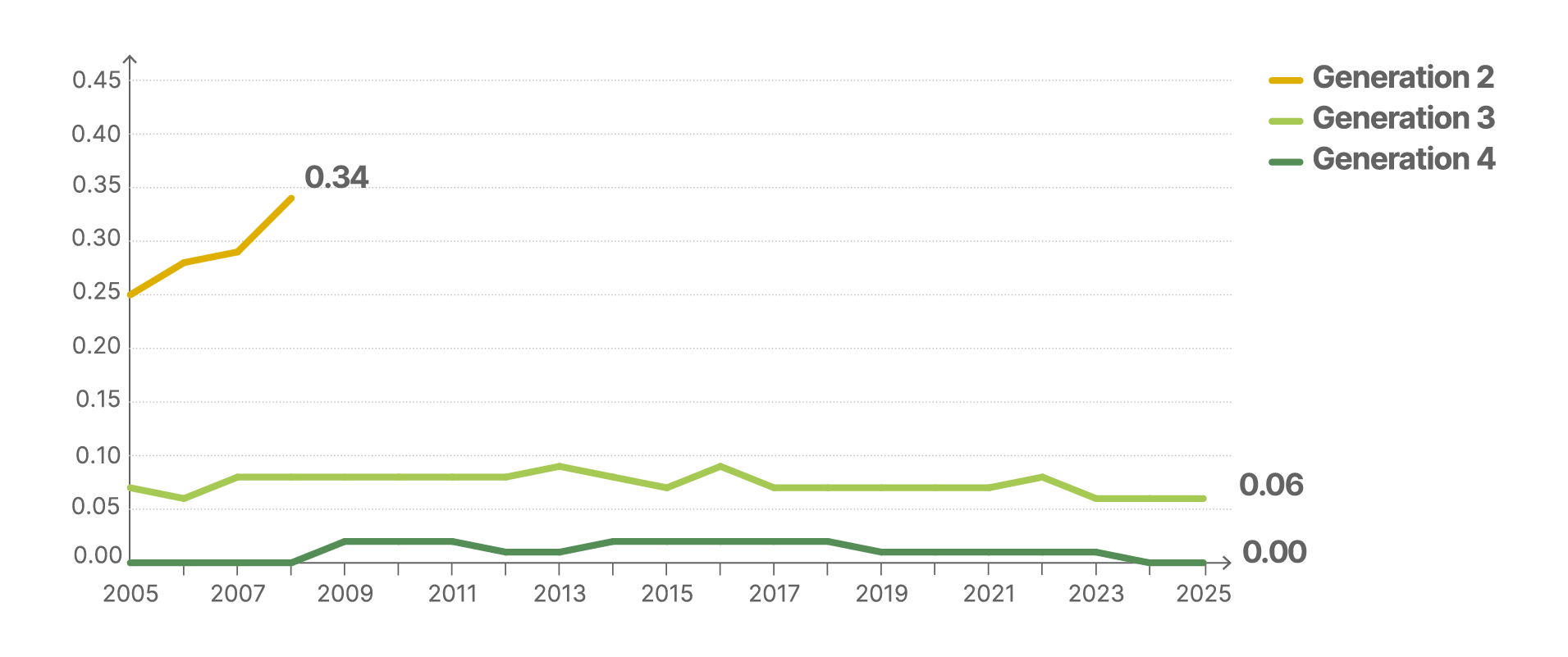
10 year moving average LOC-I hull loss accident rate (per million flights) per aircraft generation
No Data Found
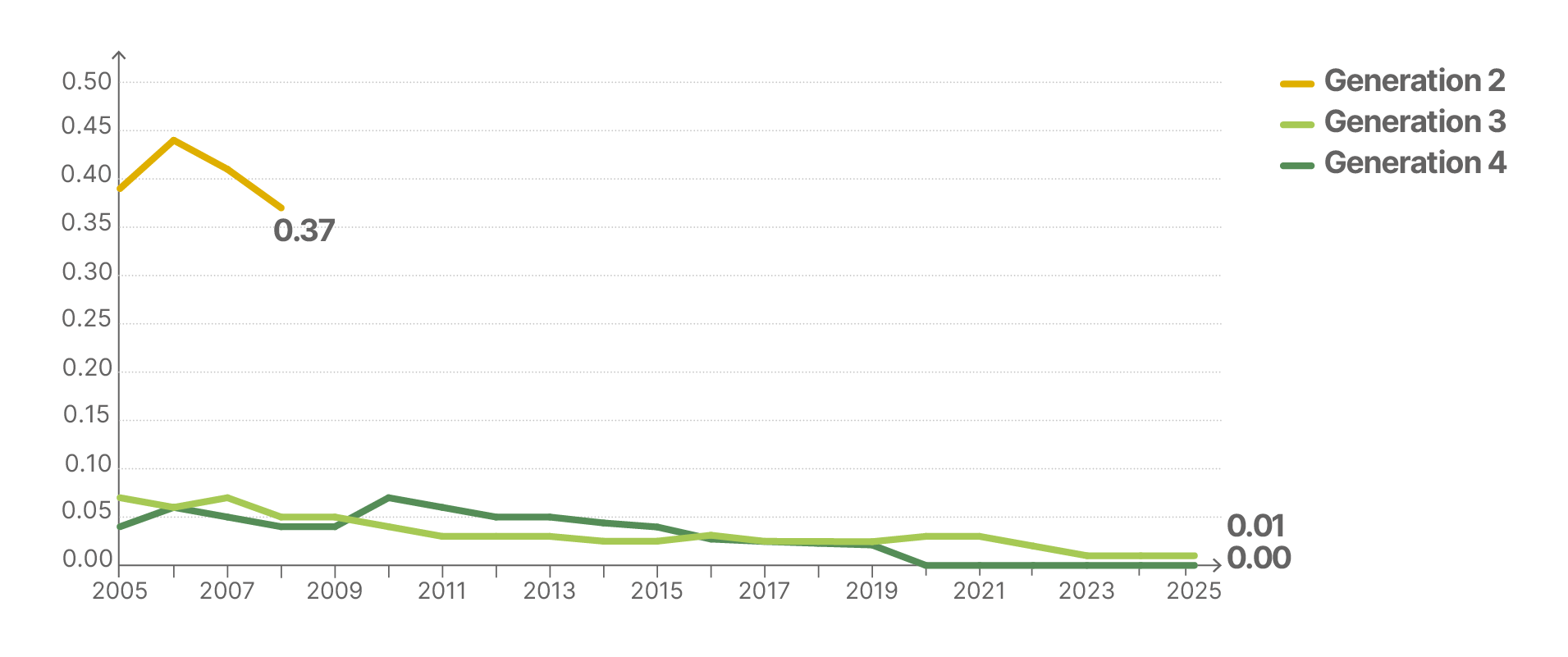
Controlled Flight Into Terrain (CFIT) accident rates
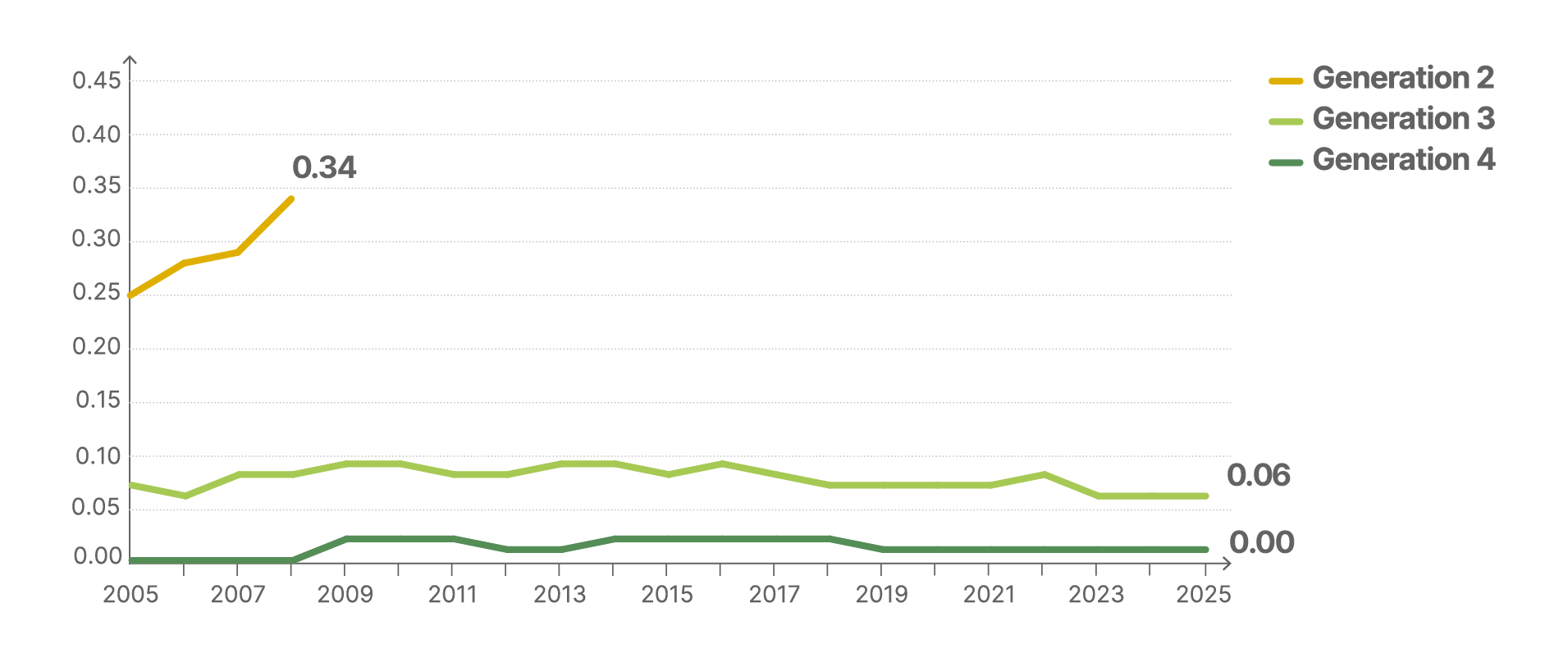
The introduction of glass cockpits, FMS, and TAWS on generation 3 aircraft has helped to reduce the CFIT fatal accident rate by 87% compared with generation 2 aircraft.
Technologies to reduce CFIT were introduced progressively with Terrain Awareness and Warning System (TAWS).
Glass cockpits installed on generation 3 aircraft improved navigation performance due to the introduction of a Flight Management System (FMS) and navigation displays that helped to further reduce the CFIT accident rates.
There were no fatal or hull loss CFIT accidents recorded for generation 4 aircraft in the last decade. Therefore, the 10-year moving average rate is zero for this generation in 2025.
10 year moving average CFIT fatal accident rate (per million flights) per aircraft generation
No Data Found
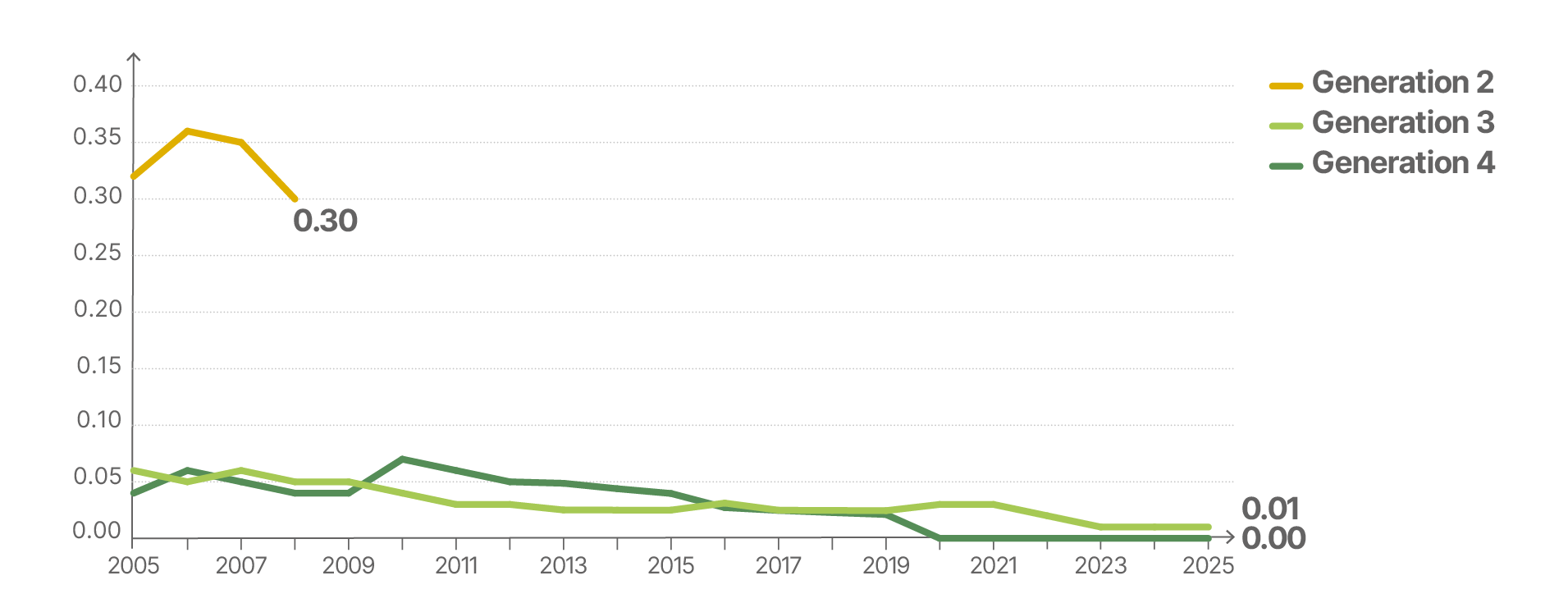
10 year moving average CFIT hull loss accident rate (per million flights) per aircraft generation
No Data Found
Runway Excursion (RE) accident rates
Technologies to reduce RE accidents have been available for over 18 years.
Most longitudinal RE accidents are related to aircraft energy management. An improvement in RE accident rates should be expected with the introduction of real-time energy and landing performance-based warning systems, such as the Runway Overrun Protection System (ROPS) available for Airbus aircraft. In 2025, the number of aircraft equipped with ROPS increased to 18% of the worldwide fleet.
10 year moving average RE fatal accident rate (per million flights) per aircraft generation
No Data Found
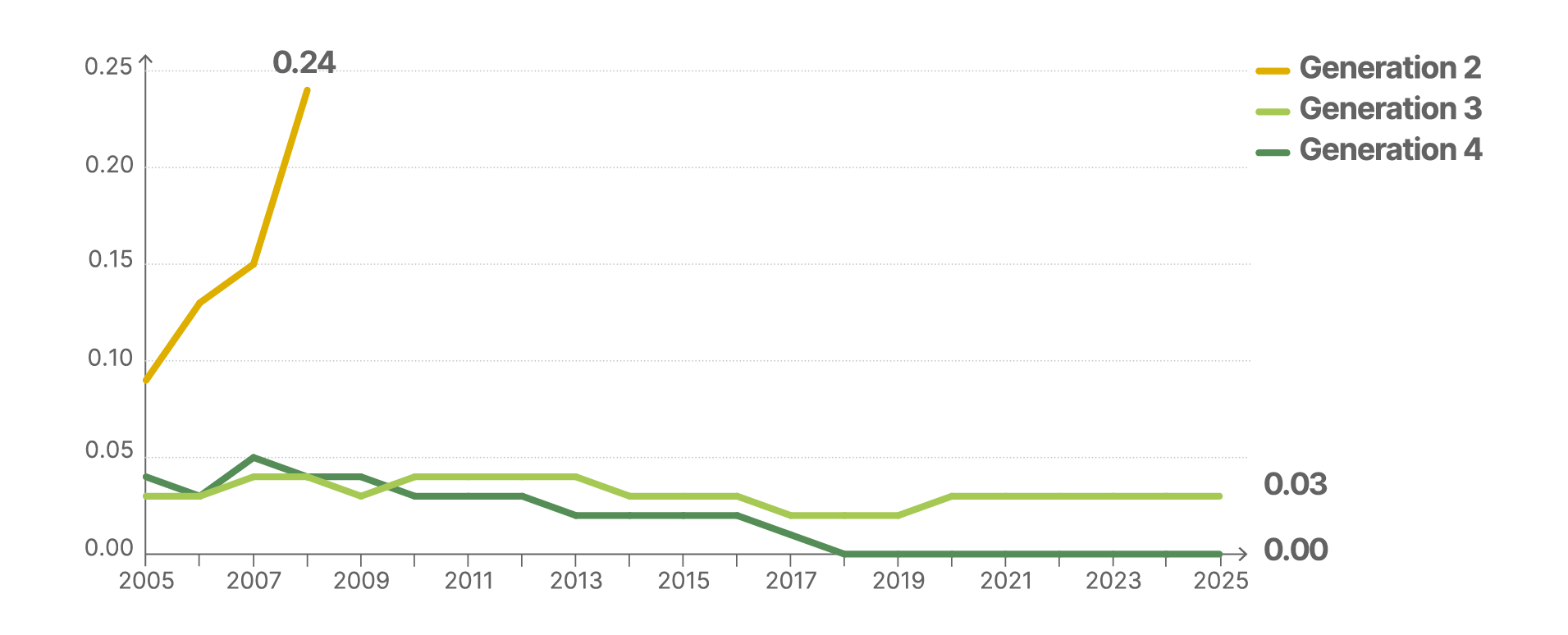
10 year moving average RE hull loss accident rate (per million flights) per aircraft generation
No Data Found